Your car’s speedometer reads speed off the rotation of a wheel. A GPS speedometer has no wheel to read — it has to work speed out from something else entirely: where you were a moment ago, and where you are now.
Position, then speed — not the other way around
A GPS chip doesn’t measure speed directly. It measures position, using timing signals from a handful of satellites, dozens of times a second. Speed is derived afterward, by comparing two positions and the time between them.
That order matters. It means GPS speed accuracy depends entirely on position accuracy — and position accuracy depends on how many satellites your phone can see, and how clean their signal is by the time it reaches you.
Why GPS speed can lag or drift
A few things degrade the read:
- Urban canyons. Tall buildings reflect satellite signal, so your phone sees a delayed, bounced version of it instead of a clean line-of-sight signal. This is the single biggest source of GPS speed error in cities.
- Tunnels and underpasses. No signal at all — most apps fall back to your last known speed and heading until signal returns.
- Cold starts. Right after opening an app, GPS chips take a few seconds to lock onto enough satellites for a confident fix. Speed readings in that window are unreliable.
- Sample rate. Some apps sample position once a second. At highway speed, that’s over 25 meters of travel between readings — enough to smooth out real acceleration and braking.
What actually improves accuracy
Two things matter more than most people expect:
- Sample rate. Reading position more frequently means smaller gaps to interpolate between, which sharpens acceleration and deceleration detection — this is why sprint times (0–100, 0–200, 400m) are sensitive to how often an app samples, not just how “accurate” its GPS chip is.
- Sensor fusion. Blending GPS with the phone’s accelerometer and gyroscope lets an app estimate speed through short GPS dropouts — a tunnel, an underpass — instead of freezing or guessing.
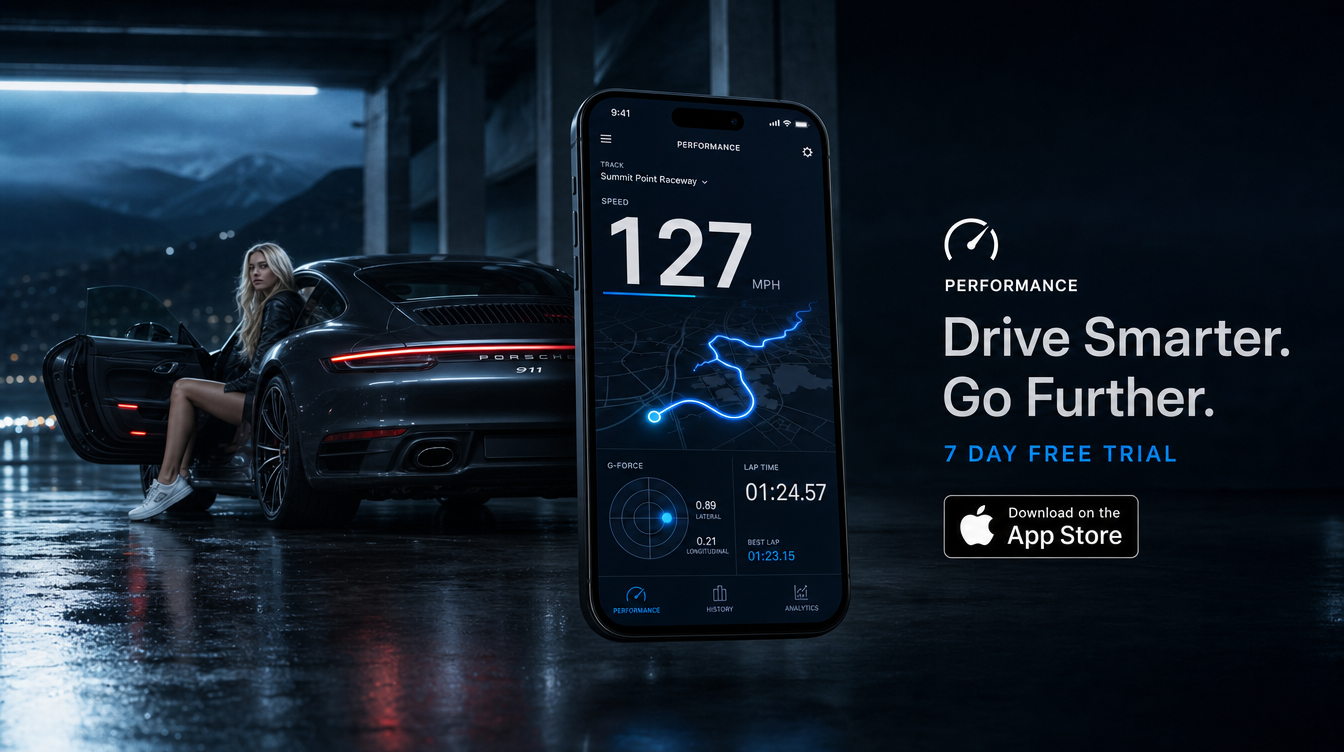
This is also why G-force readings and GPS speed should come from the same pipeline rather than two separate estimates: a car under 0.9G of braking should show a GPS deceleration curve that matches, and if they disagree, one of the two sensors is the one to trust less in that moment.
The honest caveat
No phone-based GPS speedometer will out-measure a car’s wheel-speed sensor for absolute precision — that’s not really the point. What it can do is turn a drive into a record: sprint times, G-force through a corner, a speed trace over the whole route. For that, consistent sampling and clean sensor fusion matter far more than chasing the last half-percent of accuracy.