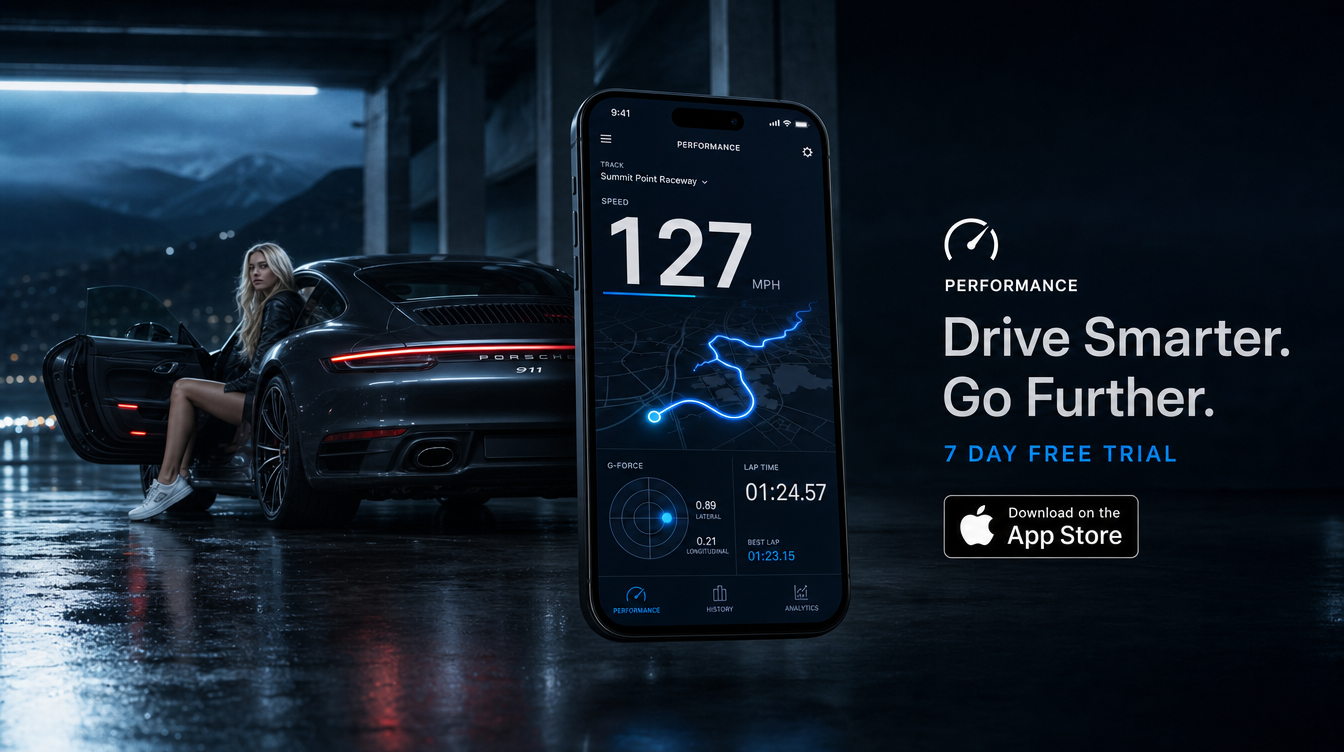
TripRank puts its live readout where a readout belongs — on the car’s own display. Speed and G-force render on CarPlay, sized and positioned like instrumentation, so the phone stays in its cradle and your interaction with it while moving stays at zero.
-
On the dash
Live speed and G on the CarPlay screen, readable at a glance like any factory gauge.
-
Zero interaction
Start the trip before you move; everything else is automatic. Nothing to touch while driving.
-
Recording underneath
The full trip — trace, G events, sprint times — records regardless of what the screen shows.
Built around eyes-on-road
The design assumption is simple: while the car moves, the app is a gauge, not an interface. Setup happens parked; review happens parked. Everything in between is glanceable output only — which is also exactly what CarPlay guidelines demand.
Setup takes ten seconds, parked
Connect to CarPlay, open TripRank, start the trip before you move — that is the entire workflow. From there the car’s screen shows speed and G-force sized like factory instrumentation, and the phone can stay in its cradle untouched until you are parked again. Apple Watch and Live Activities cover anything you might need mid-drive without looking at the phone.
Why it is deliberately boring while moving
- No interactions in motion. While the car moves, the CarPlay view is a gauge, not an interface. That is a design rule, not a limitation.
- Glanceable by design. Big type, high contrast, nothing animated that does not need to be.
- Recording is independent of the screen. Trace, G events, and sprint detection all run regardless of what is displayed — CarPlay is a window, not the engine.