
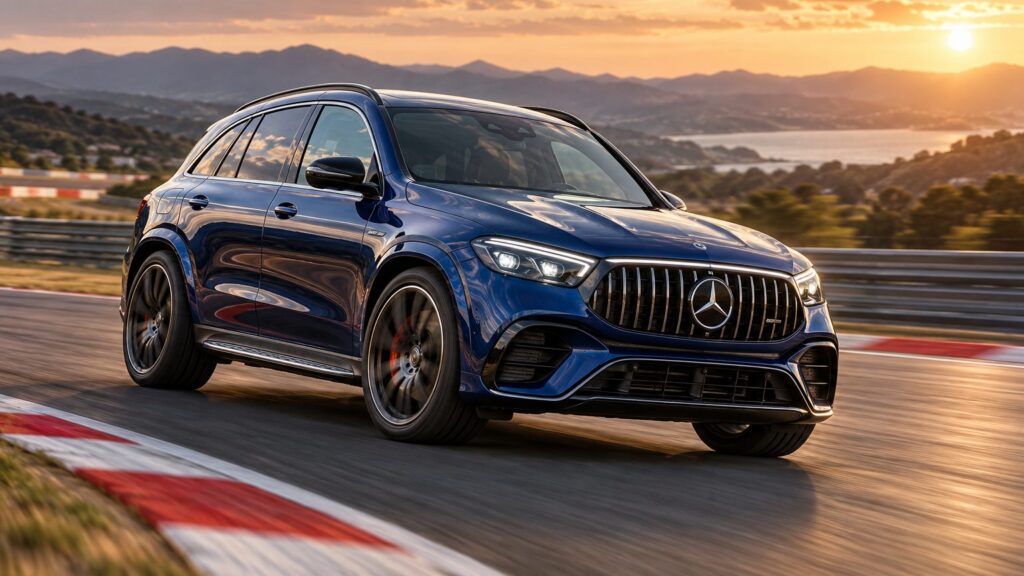
The Mercedes-AMG GT SUV has arrived with a claimed 1,153 hp and a provisional 0–100 km/h time of 2.7 seconds without rollout. Mercedes-AMG unveiled the electric SUV on 17 October 2026 at the Mercedes-Benz Museum in Stuttgart, during The 140 Festival. The range-topping GT 63 supplies those headline figures; U.S. deliveries are scheduled to begin in summer 2027.
As of 2 November 2026, the important distinction is timing: this was an October premiere, not a November reveal. Mercedes documents the event in its 140 Years of Innovation announcement.
How much horsepower does the Mercedes-AMG GT SUV have?
The GT 63 SUV produces a claimed peak 1,153 hp, according to Mercedes’ U.S. materials. However, Mercedes also lists 711 hp of continuous output. Those figures describe different operating conditions, so they should not be treated as interchangeable.
Peak output is the headline number. Continuous output matters when considering sustained demand, although neither figure alone tells drivers how the vehicle performs across repeated laps.
Mercedes also quotes 1,475 lb-ft of torque. Three axial-flux motors deliver the GT 63’s output through fully variable AMG Performance 4MATIC+ all-wheel drive.
The official Mercedes-Benz USA GT SUV announcement supplies these specifications. Importantly, Mercedes describes the vehicle figures as provisional, rather than results from an officially recognised testing organisation.
What is the Mercedes-AMG GT 63 SUV’s 0–100 km/h time?
Mercedes quotes 2.7 seconds from 0–100 km/h, approximately 62 mph, without rollout. With a one-foot rollout, the quoted time falls to 2.5 seconds.
Meanwhile, the U.S. announcement lists an estimated 0–60 mph time of 2.6 seconds without rollout. That is a different speed target: 60 mph equals approximately 96.6 km/h.
| GT 63 SUV measurement | Manufacturer figure | Qualification |
|---|---|---|
| 0–100 km/h, without rollout | 2.7 seconds | Provisional manufacturer figure |
| 0–100 km/h, one-foot rollout | 2.5 seconds | Excludes the opening foot of travel |
| 0–60 mph, without rollout | 2.6 seconds | U.S. manufacturer estimate |
| Peak output | 1,153 hp | U.S. specification |
| Continuous output | 711 hp | Different from peak output |
The global Mercedes-AMG technical announcement provides the 0–100 km/h figures. Keep its metric-speed results separate from the U.S. 0–60 mph estimate.
Safety note: Reserve acceleration testing and limit handling for closed circuits or suitable private venues, never public roads.
What does a one-foot rollout mean in an acceleration time?
A one-foot rollout delays the timed measurement until the vehicle has travelled its first foot, or 0.3048 metres. Consequently, the clock excludes part of the launch.
That explains why the GT 63’s quoted time changes from 2.7 to 2.5 seconds without changing the finishing speed. However, the 0.2-second difference belongs to these particular manufacturer figures; it is not a universal correction.
For a fair comparison, match the speed target and timing method first. Then check surface conditions, tyres, battery state and whether the result comes from a manufacturer or independent test.
Our explanation of rollout in acceleration times covers why this small timing detail can change a performance headline.
Is the Mercedes-AMG GT SUV fully electric?
Yes. The SUV uses the electric AMG.EA architecture. Mercedes describes it as the first full-size SUV developed entirely in-house by AMG, rather than AMG’s first electric vehicle.
In the GT 63, three axial-flux motors provide the drive. However, the supplied specifications do not establish the same motor configuration for every version.
Beyond acceleration, AMG highlights active pitch-and-roll stabilisation. It also describes a drive program combining simulated engine sounds, gear changes and seat vibration.
Those systems bring a driver-focused angle beyond the power figure. Still, their presence does not establish steering feel, braking consistency or corner-exit balance. Those questions need independent driving impressions and instrumented testing.
Likewise, acceleration alone cannot establish stopping performance. Our guide to braking distance from 100 km/h explains why braking deserves separate attention.
[triprank_promo_banner]
What battery and charging figures has Mercedes announced for the AMG GT SUV?
Mercedes lists an 800-volt electrical system. For the GT 55 and GT 63, it specifies a 128-kWh battery and claimed DC charging capability up to 710 kW.
However, maximum charging power is not an average charging rate. It cannot, by itself, establish how long a typical charging stop will take.
Battery temperature, starting charge level and charger capability all matter. Therefore, drivers should wait for a documented charging curve and independently measured charging sessions before drawing practical conclusions.
EPA range was not confirmed in the official materials reviewed. Nor should the battery capacity become a basis for inventing a range estimate.
When will the Mercedes-AMG GT SUV go on sale in the U.S.?
The 2028 Mercedes-AMG GT SUV is scheduled to reach U.S. dealerships in summer 2027. Mercedes names three launch versions: GT 53, GT 55 and GT 63.
However, the reviewed materials do not confirm pricing or EPA range. They also do not provide independently verified performance results.
For now, the practical takeaway is straightforward: summer 2027 is the announced U.S. arrival window, not a confirmed individual delivery date. Drivers considering an order still need market-specific equipment, availability and final specifications.
How can drivers review their own driving data?
TripRank is an iOS driving and performance telemetry companion app. It records drives with GPS and shows performance stats and charts, with stats and charts available as previews on the free tier.
Meanwhile, Pro unlocks aggregate Stats charts, including G-Force Radar and Braking and Cornering Events, plus Apple Watch heart-rate analytics. That makes it relevant to drivers interested in reviewing recorded drives, rather than simply reading a headline acceleration figure.
For another high-output reveal, Karma’s nearly 1,200 hp Eximius 1 is a bespoke four-seat hybrid commission with delivery planned for 2027.
Frequently asked questions
Does every Mercedes-AMG GT SUV have 1,153 hp?
No. The 1,153 hp figure applies to the range-topping GT 63 SUV in Mercedes’ U.S. materials. The launch lineup also includes GT 53 and GT 55 versions.
Is the 2.5-second 0–100 km/h time measured without rollout?
No. Mercedes quotes 2.5 seconds with a one-foot rollout. Its provisional 0–100 km/h figure without rollout is 2.7 seconds.
When did Mercedes-AMG reveal the GT SUV?
Mercedes-AMG revealed the GT SUV on 17 October 2026 at the Mercedes-Benz Museum in Stuttgart, during The 140 Festival.
Has Mercedes confirmed U.S. pricing and EPA range?
No. U.S. pricing and EPA range were not confirmed in the official materials reviewed as of 2 November 2026.
Bottom line
The GT 63 SUV’s headline is 1,153 hp and 0–100 km/h in 2.7 seconds without rollout. However, these remain provisional manufacturer figures, and the quicker 2.5-second result uses rollout. Ahead of the summer 2027 U.S. arrival, independent testing will matter more than another headline number. To record your own drives and explore driving telemetry, explore TripRank for iOS on the App Store.
Read next