
The Journal
Reading your own data.
Notes on telemetry, technique, and the culture around driving well.

0-100 km/h times explained clearly
Learn what 0-100 km/h means, how it is measured, why results vary, and how to record fair, repeatable acceleration runs with GPS.
How Does GPS Know the Speed Limit?
How does GPS know the speed limit? It doesn’t — not directly. A GPS chip only knows position. The speed limit number in a navigation app comes from…

How to Measure Acceleration With iPhone: A Practical Guide
To measure acceleration with iPhone, use GPS for timed runs and motion sensors for g readings. Get the setup, limits and track-only steps.
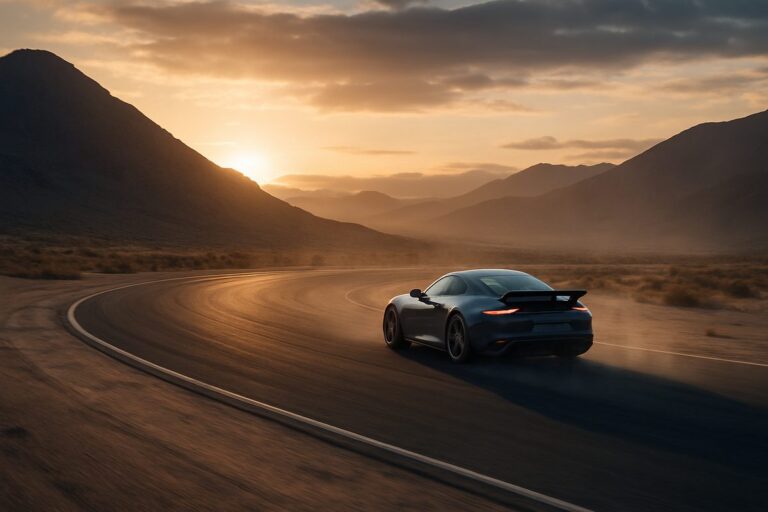
How Weather and Altitude Affect Acceleration Times
Hot air, humidity and elevation can slow 0–100 km/h, 0–200 km/h and quarter-mile runs. Here is how density altitude changes car performance.
How TripRank Works: GPS Tracking, Scores & Pro Features
How does TripRank work? Start a trip and TripRank tracks your GPS position and speed the whole drive — even with no signal — then turns that raw…
What Is TripRank? The Driving App, Explained
What is TripRank? It’s an iPhone app that tracks your drives using GPS, then turns each trip into live stats and a post-drive scorecard — top speed, G-force,…
Speed From GPS: How Accurate Is It, Really?
Speed from GPS is accurate to within about 0.1–0.5 mph under a clear sky, and it gets noisy — or drops out for a second — in tunnels,…

iPhone Speedometer: 4 Ways to See Your Speed on iOS
Your iPhone has no built-in speedometer app, and Apple Maps only shows the posted speed limit — not how fast you’re actually going. To see live speed on…
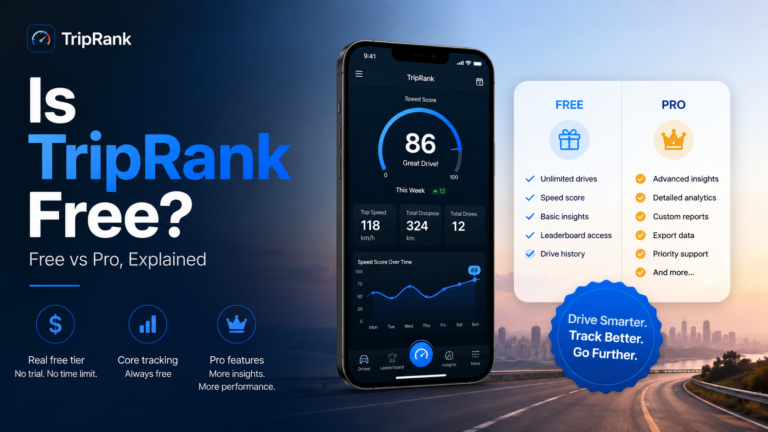
Is TripRank Free? Free vs Pro, Explained
If you’ve searched “Is TripRank free?” — good news: yes, TripRank is free to download and use. You can track drives, log trips, and build a driving history…
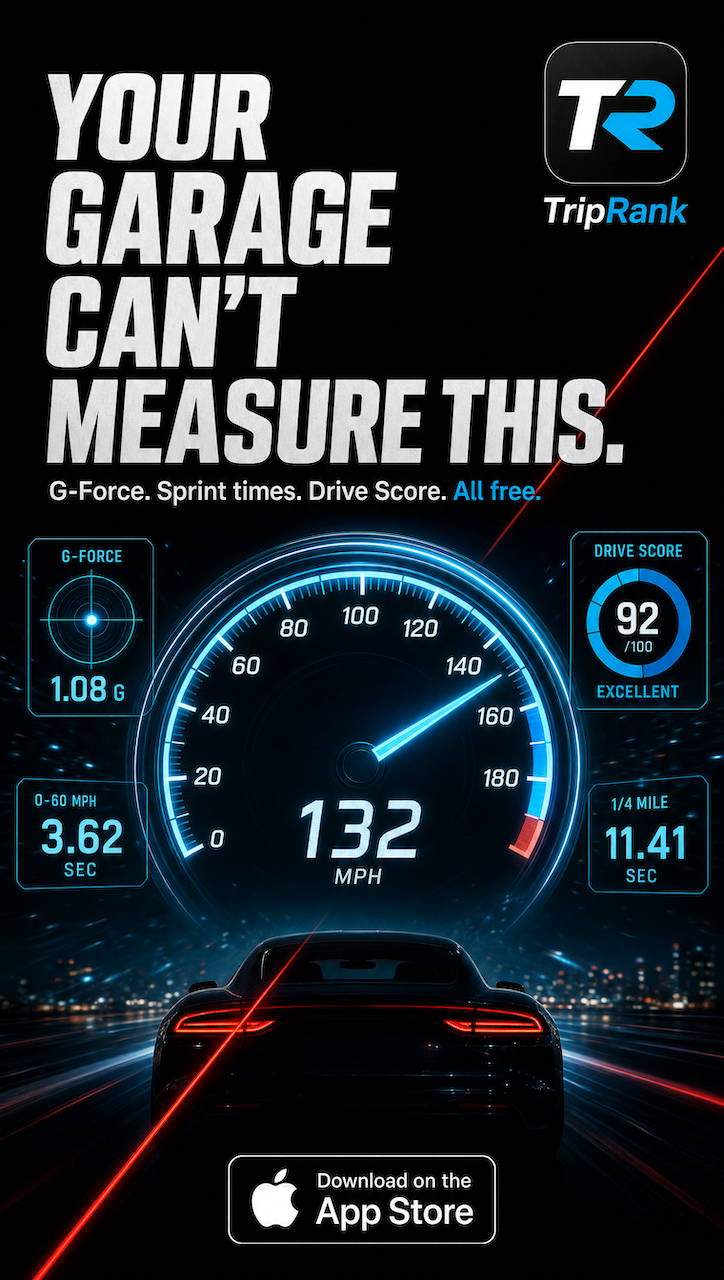
First Track Day: What to Actually Check Before You Go
A first track day fails for boring reasons long before driving skill enters the picture. The pre-track checklist that matters.